Hi Lovebug,
Most people abandon a spiritual practice for one reason: it did not deliver the experience they wanted fast enough. We treat meditation, prayer, breathwork, journaling, or energy work like a vending machine — insert twenty minutes, receive calm, clarity, a healed relationship, or a signed client. And when the payoff does not arrive on schedule, we conclude the practice is not working.
This is not a discipline problem. It is a purpose problem. A practice is not a lever we pull to control our reality. It is a form of self-care and personal mastery, and its real work is happening in a place the ego is not watching.
We know this pattern from the inside. There were seasons in our own lives, where we sat down to practice with a hidden agenda — hoping the sitting would produce a better mood, a smoother day, a faster resolution to something we did not want to feel. What actually changed us was not the sessions that felt transcendent. It was the ordinary mornings we showed up when nothing arose, when the mind wandered, when the results were nowhere in sight, and we stayed anyway.
That is where the real skill was being built. Not the skill of manufacturing a state, but the skill of remaining present without requiring the moment to reward us for it.
This is the mechanism most people miss. Every time we return to a practice without demanding a payoff, we are training three capacities that shape the entire quality of a life: attentiveness, presence, and consistency. Attentiveness is the ability to notice what is actually here instead of what we assume is here. Presence is the ability to stay in the room with our own experience without escaping it. Consistency is the willingness to keep participating when motivation has left the building.
These are not spiritual decorations. They are the load-bearing skills of a mature human being, and they are the same skills that let us listen to a client without fixing them, stay steady with a partner who is upset, hold our own emotion without outsourcing it, and finish the work we said we would finish.
So the reframe is this: we are not practicing to get somewhere. We are learning to fall in love with the change that is changing us. The destination-oriented practitioner is always measuring — how do I feel now, is this working, has my life improved yet — which keeps attention on the self that wants relief. The journey-oriented practitioner becomes interested in the transformation itself, in who they are becoming through the returning.
And, here is the part that surprises people: the person who stops chasing the payoff is the one whose life changes most visibly, because attentiveness, presence, and consistency inevitably move outward. They show up as clearer relationships, cleaner boundaries, better decisions, and the capacity to take action on a calling that used to feel too big. Practice does not replace action. It builds the person who can sustain it.
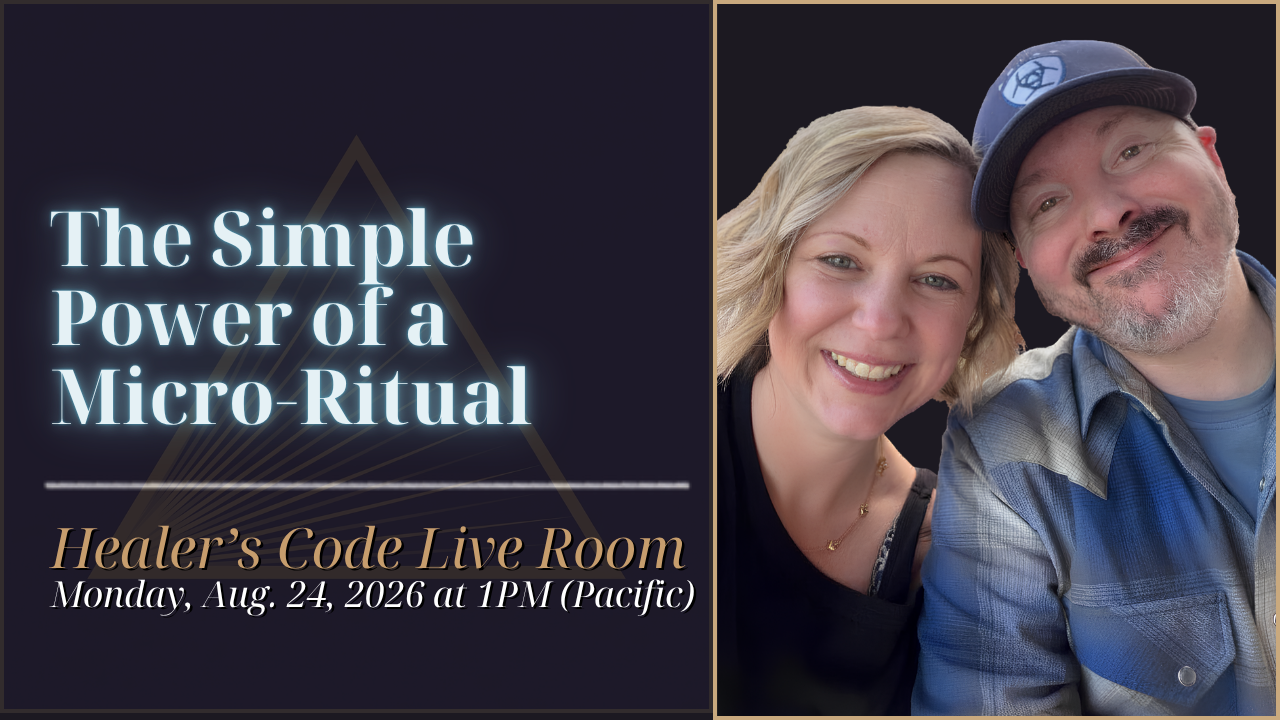
Tomorrow, we are gathering live in our community for a free Healer's Room call, where this is exactly what we work with — not more spiritual concepts to collect, but the lived practice of becoming someone whose presence is stable enough to serve. If you have been circling the same practice for years, wondering why the results feel inconsistent, this is a good room to be in.
Join us live in the free Healer's Room
With love,
Matt and Joy Kahn

PS -- Starting today at 8am pacific, please join us in the community for a free 30-day QUE challenge. For those who loved our QUE audio series, this month-long exploration will be an incredible way to invite expanded frequency and a renewal of energy throughout your life.
Just follow this link at 8am pacific to join in today and for the next 30 days. If unable to join live each day, that link will also provide access for replays.
PPS -- If you aren't a member of our community, you can join by clicking here.



Responses